Can dogs eat oyster mushrooms?
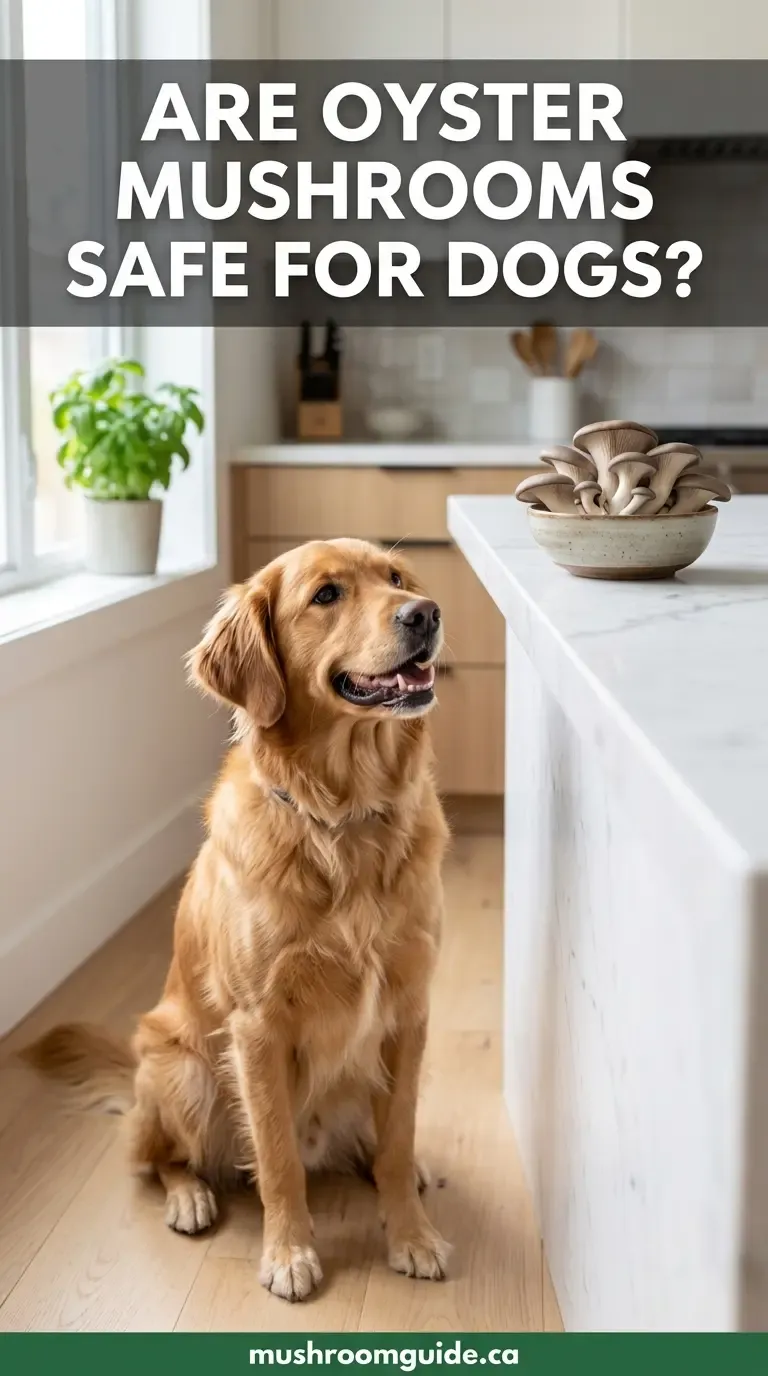
Short answer: Yes. Cooked, plain, store-bought or home-grown oyster mushrooms (Pleurotus ostreatus and relatives) are non-toxic to dogs and are sometimes recommended as a low-calorie, high-fibre treat.
The “but” is everything that goes around the mushroom: raw mushrooms are hard to digest, any wild mushroom is a risk you shouldn’t take, and oyster mushrooms cooked the way humans cook them — with onion, garlic, butter, heavy oil, or salty seasoning — can be dangerous even if the mushroom itself is fine.
This post is a complete breakdown. It is not veterinary advice. If your dog has eaten a wild mushroom of unknown identity, call your vet or the Pet Poison Helpline (1-855-764-7661) immediately — bring a sample if possible.
TL;DR table
| Form | Safe for dogs? |
|---|---|
| Cooked plain oyster mushrooms (no seasoning) | ✅ Yes, small amounts |
| Raw oyster mushrooms | ⚠️ Not toxic but hard to digest |
| Oyster mushrooms cooked with onion/garlic/leek/chive | ❌ No — alliums are toxic to dogs |
| Oyster mushrooms cooked in butter or heavy oil | ❌ No — risks pancreatitis |
| Wild mushrooms (any species) | ❌ Never — risk is not worth it |
What “safe” actually means
Oyster mushrooms contain no compounds known to be toxic to dogs. Most veterinary sources and the ASPCA agree: cultivated, store-bought mushrooms — oyster, cremini, button, portobello, shiitake, king oyster, lion’s mane — are generally safe for dogs in small amounts when cooked plain.
“Small amounts” matters. A piece or two as a treat is fine. A bowlful is likely to cause vomiting or diarrhea regardless of the species, because canine digestive systems aren’t designed to process large quantities of fungal cell walls efficiently.
Why raw isn’t a great idea
Raw mushrooms aren’t toxic, but they are:
- Hard to digest — dogs lack the enzymes to break down chitin efficiently, which is the structural material of mushroom cell walls
- Likely to cause GI upset — vomiting, gas, loose stool
- Lower in available nutrients — most of the nutritional value in mushrooms is unlocked by heat
Cooking softens the cell walls and makes everything easier on your dog’s stomach. Steam, boil, or sauté in water (no oil). 3–4 minutes is enough.
Why “cooked with onion/garlic” is a hard no
This is the most common way home-cooked mushrooms harm dogs. Onion, garlic, leek, chive, and shallot (the Allium family) contain compounds that destroy red blood cells in dogs, causing hemolytic anemia.
Symptoms appear over 1 to 3 days: lethargy, pale gums, dark urine, loss of appetite, fast heart rate. By the time you see symptoms, the damage is already done.
A small amount of garlic in a leftover risotto probably won’t hurt a 40-kg dog. But:
- A small dog (5–10 kg) is at meaningful risk from even a tablespoon of cooked alliums.
- Garlic powder is roughly 4–6× more concentrated than fresh garlic.
- Repeated low-dose exposure can accumulate damage.
If your dog ate human food cooked with mushrooms, the danger is usually the seasoning, not the mushroom.
Why heavy oil and butter are a problem
Even with a safe mushroom and no onion or garlic, mushrooms cooked in butter, ghee, or a heavy oil can cause pancreatitis — inflammation of the pancreas that can be acutely dangerous, especially in breeds prone to it (Schnauzers, Cocker Spaniels, Yorkies, overweight dogs).
If you’re feeding your dog mushrooms as a treat, cook them plain in water or with a tiny bit of olive oil. No butter, no bacon fat, no salt.
Wild mushrooms: never
This applies to dogs, cats, and humans equally:
Don’t let your dog eat a wild mushroom. Ever.
A few of the deadliest mushroom species in Canada — Amanita phalloides (death cap), Galerina marginata, Cortinarius species, Amanita virosa (destroying angel) — can kill from a single serving. Symptoms sometimes appear hours or even days after ingestion, by which point the damage to the liver or kidneys is irreversible.
Dogs find mushrooms by smell, and some toxic species (including some Amanita) are reported to smell appealing to them. This is a known veterinary problem in BC, southern Ontario, and parts of the Maritimes where death caps and related species have established.
If your dog grabs a mushroom in the yard or on a walk:
- Get the mushroom away. Take a piece of it with you — your vet needs it.
- Photograph the mushroom and the surrounding area (substrate, nearby trees).
- Call your vet or the Pet Poison Helpline (1-855-764-7661) immediately. Don’t wait for symptoms.
- Don’t induce vomiting unless instructed. Some toxins are worse coming back up.
What about cats?
Cats are also fine with small amounts of cooked, plain oyster mushrooms — but the same allium rule applies (more strictly, because cats are more sensitive to onion and garlic than dogs). Most cats won’t be interested anyway; the texture is unfamiliar and they’re obligate carnivores.
Cats also have a documented attraction to some wild mushrooms (notably Amanita muscaria, the iconic red-and-white fairy-tale mushroom), likely from the same compounds that attract them to catnip and silver vine. If you grow mushrooms indoors and have a curious cat, keep the fruiting chamber inaccessible.
How to give your dog oyster mushrooms (the actual recipe)
If you’ve decided to share:
- Take a small handful of fresh oyster mushrooms (~30–50 g for a medium dog).
- Tear into bite-sized pieces.
- Steam or simmer in plain water for 4 minutes.
- Drain well, let cool.
- Offer 1–2 pieces as a treat. Wait 24 hours before giving more if it’s their first time, to make sure there’s no individual sensitivity.
That’s it. No oil, no seasoning, no garlic, no salt.
Signs of a problem (cooked or wild)
Even with a safe mushroom, watch for:
- Vomiting or diarrhea
- Excessive drooling
- Loss of appetite
- Lethargy
- Tremors, weakness, or stumbling
- Yellowing of gums or eyes (sign of liver involvement)
Any of these symptoms after mushroom exposure — especially wild mushroom exposure — is a veterinary emergency. Don’t wait.
Bottom line
Yes, dogs can eat oyster mushrooms. Cook them plain, serve in small amounts, skip the seasoning, never feed wild. Most “is X safe for dogs” posts handwave this; the truth is the mushroom is the easy part and the context around the mushroom is what matters.
This is not veterinary advice. Always check with your veterinarian before introducing new foods, especially if your dog has existing health conditions or takes medication.
See also: Pet-safe mushrooms guide — every cultivated species, for dogs and cats. Air fryer oyster mushrooms — plain cooked oyster mushrooms; the dog-safe recipe in this post scales up to a human portion. How to grow oyster mushrooms in Canada — grow your own so you know exactly what you’re feeding.