King oyster vs oyster vs lion's mane: taste guide
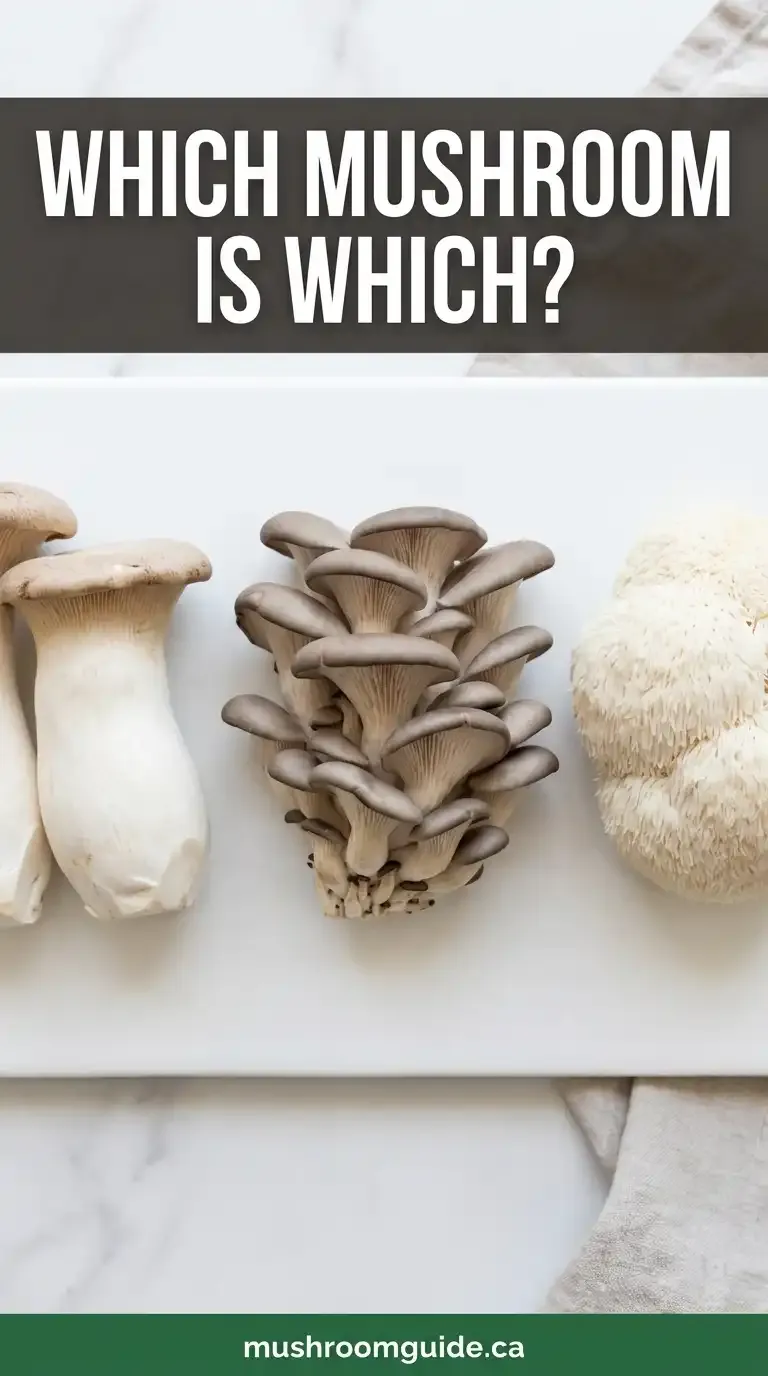
If you’re staring at a farmer’s market table with three unfamiliar mushrooms in front of you — or scrolling Sporeworx trying to pick a species for your first grow kit — the honest question isn’t which is better. They’re not interchangeable. Each one wants a different cooking technique, a different recipe vocabulary, and a different shopping list.
This post is a direct side-by-side: king oyster vs oyster vs lion’s mane. Taste, texture, technique, pairings.
TL;DR — the matrix
| King oyster | Oyster (grey/blue/pink) | Lion’s mane | |
|---|---|---|---|
| Flavour | Mild, savoury, slightly nutty | Mild to deep umami; pink reads “bacon-y” | Sweet, seafood-like (crab/lobster) |
| Texture cooked | Dense, scallop-like, chewy | Tender with crisp edges | Tender, slightly springy, pulls apart |
| Slice or tear? | Slice into 1 cm coins or planks | Tear into bacon-strip pieces | Tear into bite-size chunks |
| Best technique | High-heat sear | Dry-sauté then add oil | Pan-fry, dry-sauté, or pan-roast |
| Cooks “like” | Scallops, pork tenderloin | Bacon, pulled meat | Crab cakes, scallops |
| Pairs with | Soy, butter, garlic, sesame | Smoked paprika, maple, miso | Lemon, butter, dill, Old Bay |
| Stems usable? | Stem is the product | Tough — trim base only | Whole mushroom usable |
| Storage (fridge, paper bag) | 10–14 days | 3–10 days (varies by colour) | 5–7 days |
In the kitchen
King oyster (Pleurotus eryngii)
The shape: Single thick stems with small caps. You’re cooking the stem.
The flavour: The mildest of the three. King oyster has barely any “mushroom” flavour on its own — it’s a clean, savoury, slightly nutty canvas. It takes seasoning aggressively and doesn’t fight your other ingredients.
The texture, cooked: This is the headline. Sliced crosswise into 1 cm coins and seared in a hot pan, king oyster develops a texture genuinely similar to seared scallops — firm, chewy, with a snap-bite exterior. Sliced lengthwise into planks, it cooks like a steak. Torn into strands, it pulls apart like roast pork.
The technique: High heat is non-negotiable. Hot cast iron or carbon steel, neutral oil with a high smoke point, 2–3 minutes per side until the surface is mahogany-brown. Salt at the end.
Where it shines:
- “Vegan scallop” preparations — coins seared in butter, finished with lemon and parsley
- Pulled-pork sandwiches — torn strands tossed in BBQ sauce
- Stir-fries — diced, cooks like firm tofu but with more bite
- Grilled — planks brushed with soy + sesame oil
What to skip:
- Don’t slice thin (loses the textural point)
- Don’t braise long (gets tough, not tender)
- Don’t pair with sauces so strong they overpower the texture you’re paying for
Oyster mushrooms (grey, blue, pink, yellow — Pleurotus ostreatus / djamor / citrinopileatus)
The shape: Fan-shaped clusters of thin caps on short stems. You’re cooking the caps; trim and compost the cluster base.
The flavour: Mild and earthy when grey or blue; deeply savoury, almost meaty when pink or yellow (the heat-loving varieties). Pink oyster is famously called the “bacon mushroom” because cooked right it develops crisp edges and a slightly smoky, bacon-adjacent flavour.
The texture, cooked: Tender interior with crispy, crunchy edges when seared properly. The fan shape gives more “outside” per gram than round mushrooms, so they crisp aggressively.
The technique: Tear, don’t slice. Torn edges crisp better than knife-cut. Dry-sauté in a hot pan first (no oil) to drive off water, then add oil and brown. Salt at the end. See how to cook pink oyster mushrooms and air fryer oyster mushrooms for variety-specific techniques.
Where it shines:
- Pulled mushroom sandwiches — tear into bacon-strips, sear, sauce
- Stir-fries — high heat, finish with soy and sesame
- Soup garnish — crisp on top of creamy soups
- Air-fried as a crispy snack with sea salt
- Mushroom “carnitas” — torn smaller, cumin, lime, cilantro
What to skip:
- Don’t wash them (sponges that hold water and never crisp)
- Don’t crowd the pan (they steam instead of crisp)
- Don’t slice thin (loses the textural point)
Lion’s mane (Hericium erinaceus)
The shape: White, cascading “icicle” spines clustered into a puffball. No cap, no stem in the conventional sense.
The flavour: Sweet, mild, and seafood-like. The closest reference points are crab and lobster — that combination of sweetness, mineral salinity, and tender texture. It’s the most distinctive flavour of the three.
The texture, cooked: Tender, slightly springy, with a fibrous internal structure that pulls apart in strands. Holds shape during cooking better than oyster but not as densely as king oyster.
The technique: Tear into bite-size chunks. Pan-fry in butter or oil over medium-high heat, 5–7 minutes, golden on both sides. Don’t overcook — lion’s mane goes from juicy to dry quickly.
Where it shines:
- “Crab cakes” — tear small, sauté, mix with breadcrumbs and binder, pan-fry like real crab cakes
- “Lobster” rolls — sauté in butter, pile on a buttered split-top bun with a squeeze of lemon
- Lion’s mane scampi — butter, garlic, lemon, parsley
- Pan-roasted as a side — whole small clusters, hot oven, butter + thyme baste
- Bisque — adds genuine seafood-like depth to a creamy soup
What to skip:
- Don’t slice thin (loses the textural point)
- Don’t braise (goes from tender to mush)
- Don’t pair with strong cured-meat flavours that bury its sweetness
How to pick which to grow first
If you’re new to home cultivation:
| You want… | Pick |
|---|---|
| Easiest first grow, most forgiving | Grey or blue oyster |
| Highest “wow factor” first harvest | Pink oyster (visually striking) or lion’s mane |
| The most useful kitchen mushroom | King oyster |
| Fastest harvest cycle | Pink or yellow oyster (4–6 days from pin) |
| Slowest, biggest individual mushrooms | King oyster (10–14 days from pin) |
| Mildest flavour for picky eaters | King oyster |
| Strongest “vegan meat” effect | King oyster (for stems) or pink oyster (for bacon) |
For Canadian-specific climate notes and the bucket method, see how to grow oyster mushrooms in Canada.
Pairings cheat-sheet
King oyster pairs with
- Soy sauce, miso, sesame oil
- Butter, garlic
- Black pepper, smoked paprika
- Lemon (finishing)
- Asparagus, leeks, scallions
- Pasta, polenta, rice noodles
Oyster pairs with
- Smoked paprika, cumin
- Maple syrup, soy sauce (for the bacon effect)
- Thyme, rosemary
- Garlic, shallots
- Eggs (omelette, frittata)
- Crusty bread, grain bowls
Lion’s mane pairs with
- Butter, ghee
- Lemon, capers
- Dill, parsley, tarragon
- Old Bay seasoning
- White wine (in cooking)
- Pasta (cream sauces), risotto
- Brioche, soft buns
The one-line take
- King oyster is the most versatile because it’s the most neutral — it cooks like meat and goes with most cuisines.
- Oyster (especially pink) is the most flavour-forward — it’s the star of its own dish, not a background ingredient.
- Lion’s mane is the most specific — it’s a “seafood mushroom” and you cook it in seafood-shaped recipes.
You don’t pick one. You learn each, and use them where they belong.
Related guides: How to grow oyster mushrooms in Canada — the bucket method, climate notes, Canadian suppliers. How to cook pink oyster mushrooms and Air fryer oyster mushrooms — variety-specific techniques. When to harvest king oyster mushrooms — why king oyster timing is completely different.